Unitree G1 footwear: what to check before buying
A practical starting point for documenting G1 foot geometry, ankle clearance and operating conditions before evaluating a shoe.
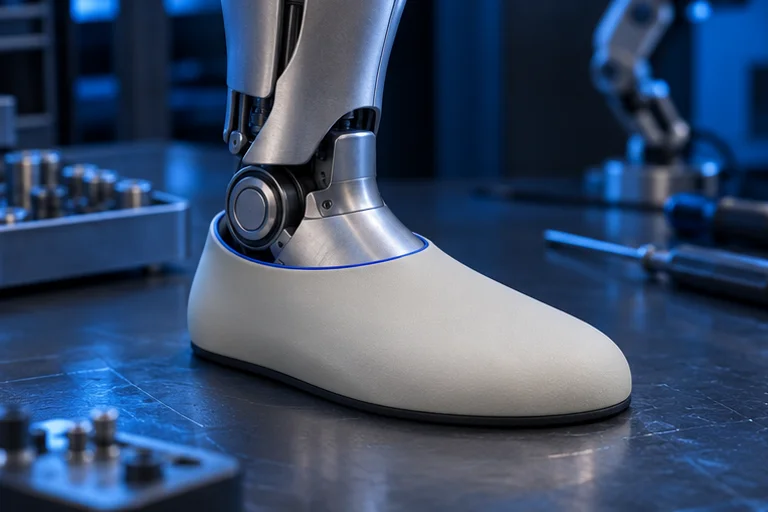
If you are sourcing footwear for a Unitree G1, start with the model profile and the surface the robot needs to move on. The supplier can use a matching foot reference or fit record to evaluate dimensions, clearance and retention.
Confirm the model and the hardware revision
Unitree lists G1 and G1 EDU in its product specifications. Share the full model name, any revision identifier available to the operator and whether any lower-leg or foot parts have been replaced.
Use a matching foot and ankle reference
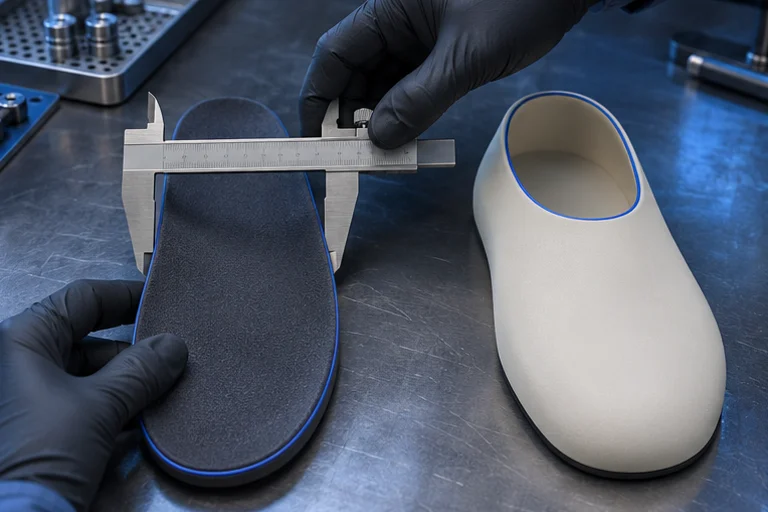
Use a revision-matched drawing or a verified fit record when one is available. If the foot geometry still needs confirmation, the supplier can request the sole length, maximum width, heel width and clear foot and ankle photos. Note where the foot transitions into the ankle shell, since clearance can change as the joint moves.
The model’s overall standing height is useful for identification. Ask the supplier for the internal footprint and the clearance requirements of the exact shoe variant before making a purchase decision.
Document the floor and the planned movements
Write down the surface, whether it is clean or dusty, and the motions planned for the robot. A static display, repeated turns on a booth floor and a live walking demonstration impose different requirements. Ask for added mass per shoe, retention details and the evidence behind any stated traction or compatibility claim.
Review fit and movement separately
A stationary review can establish contact points and visible clearance. Movement evaluation requires its own approval and controlled conditions under the manufacturer’s procedures. Record the hardware and controller version, footwear revision, floor and allowed motions so that the result can be interpreted and repeated by the operating team.